Start With the End User and the Road Ahead
A meal box should suit the person eating it and the route it will travel. A school lunch moving across Braamfontein in the morning has different needs to a corporate delivery going to Midrand or a church function in Soweto after a long service. If the food is expected to sit in a vehicle, cross a windy loading bay or wait in a queue for handover, the box has to protect heat, texture and presentation.
That starts with choosing a box size that matches the meal, not just the budget. Overfilled boxes squash chips and wings, while boxes that are too large let food slide around. For fried chicken, wings and sides, a snug fit is better because it reduces movement and keeps the box neat when stacked. It also makes counting and dispatch easier when a team is pushing out several hundred meals at once.
- Use one box size for full meals and one smaller size for lighter portions.
- Match each box to the route time and the temperature it must hold.
- Keep the box shape consistent so stacking on trays is quicker.
Separate Wet and Dry Items Before They Fight Each Other
The quickest way to lose quality is to pack everything together. Sauce softens coating, steam turns chips limp, and a tomato salad can make the whole box look messy before it leaves the counter. Good packing keeps the components apart until the person eating them is ready. That is especially important for family bulk orders and crew meal drops where boxes may be opened at different times.
Use compartments, small sealed tubs or paper wraps where needed. If a sauce must go into the box, place it in a sealed container rather than pouring it over the food. Fried chicken should sit on a dry layer, not directly against a hot base that traps moisture. A little breathing space matters, even if the box is only travelling a short distance.
- Keep sauces in separate containers where possible.
- Place fried items on a dry liner to reduce steaming.
- Pack cold items away from hot items when the menu allows it.
Build a Packing Line That Holds Up Under Pressure
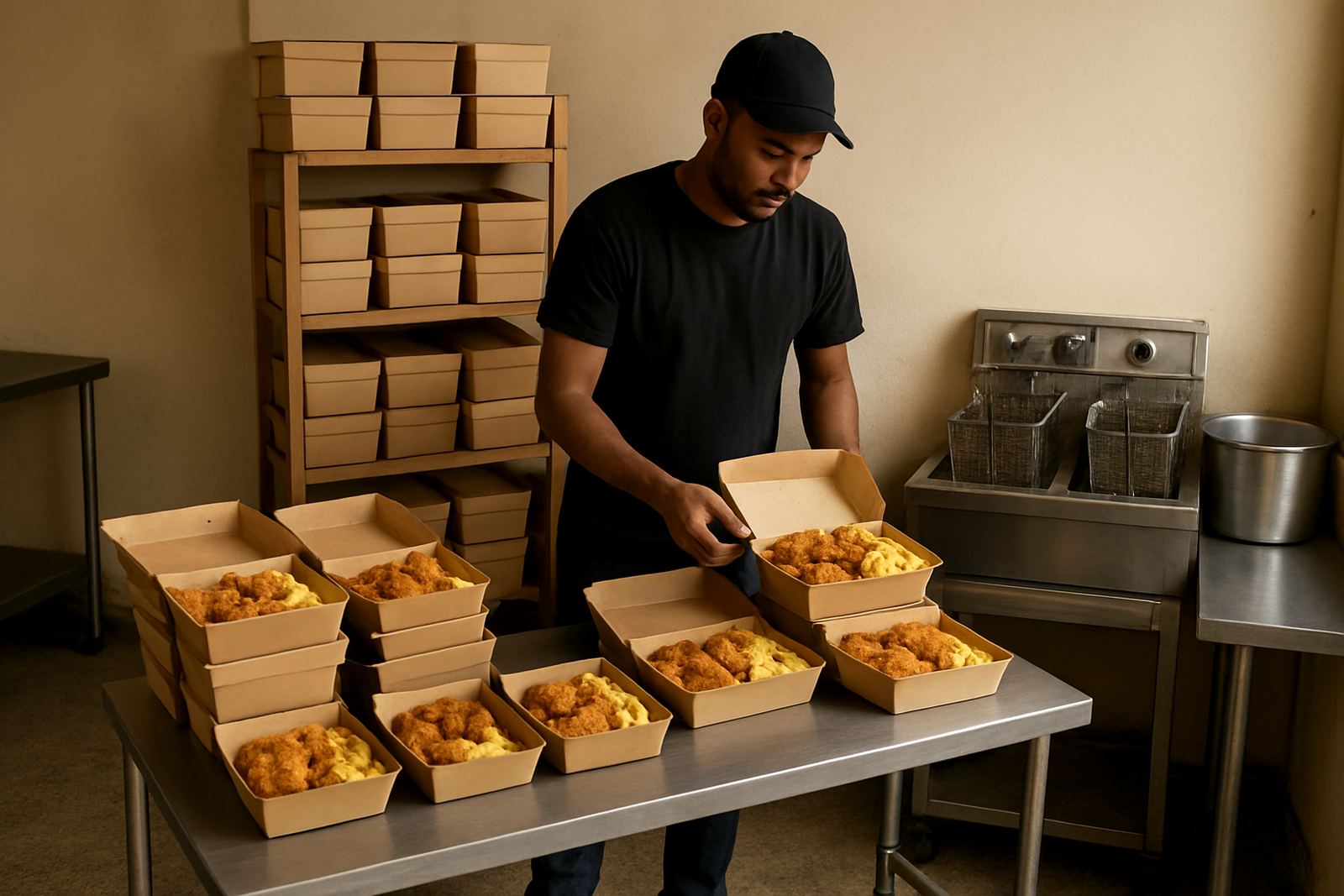
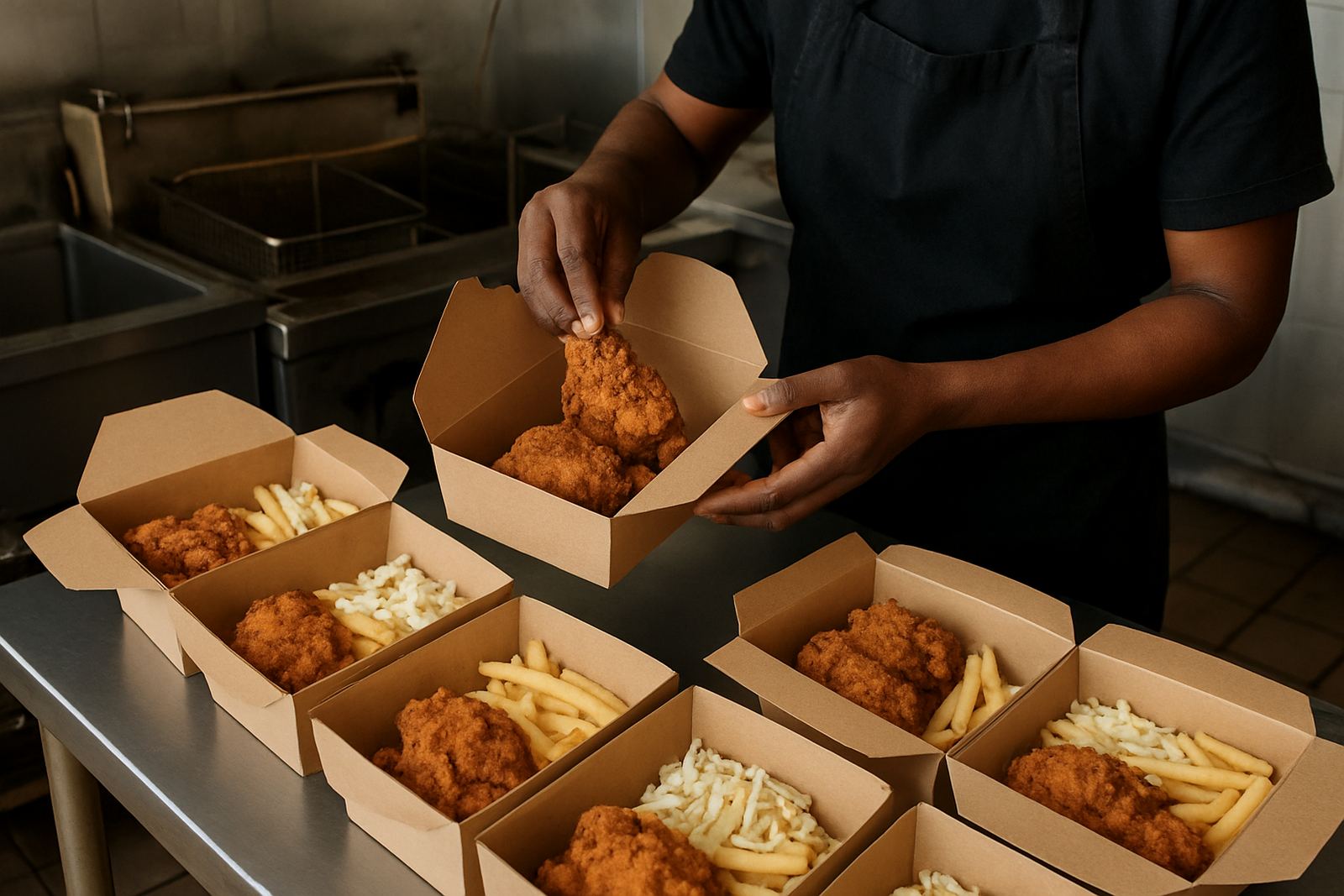
When a kitchen is preparing event meal boxes, the packing line has to work like a relay. One person portions, one checks the contents, one seals and one stacks for collection. This reduces confusion and cuts mistakes, which is vital when a delivery van is waiting outside and the load-shedding timer is not your friend. Clear roles also help during busy Friday lunches in Johannesburg, where call-ins and walk-ins can spike at the same time.
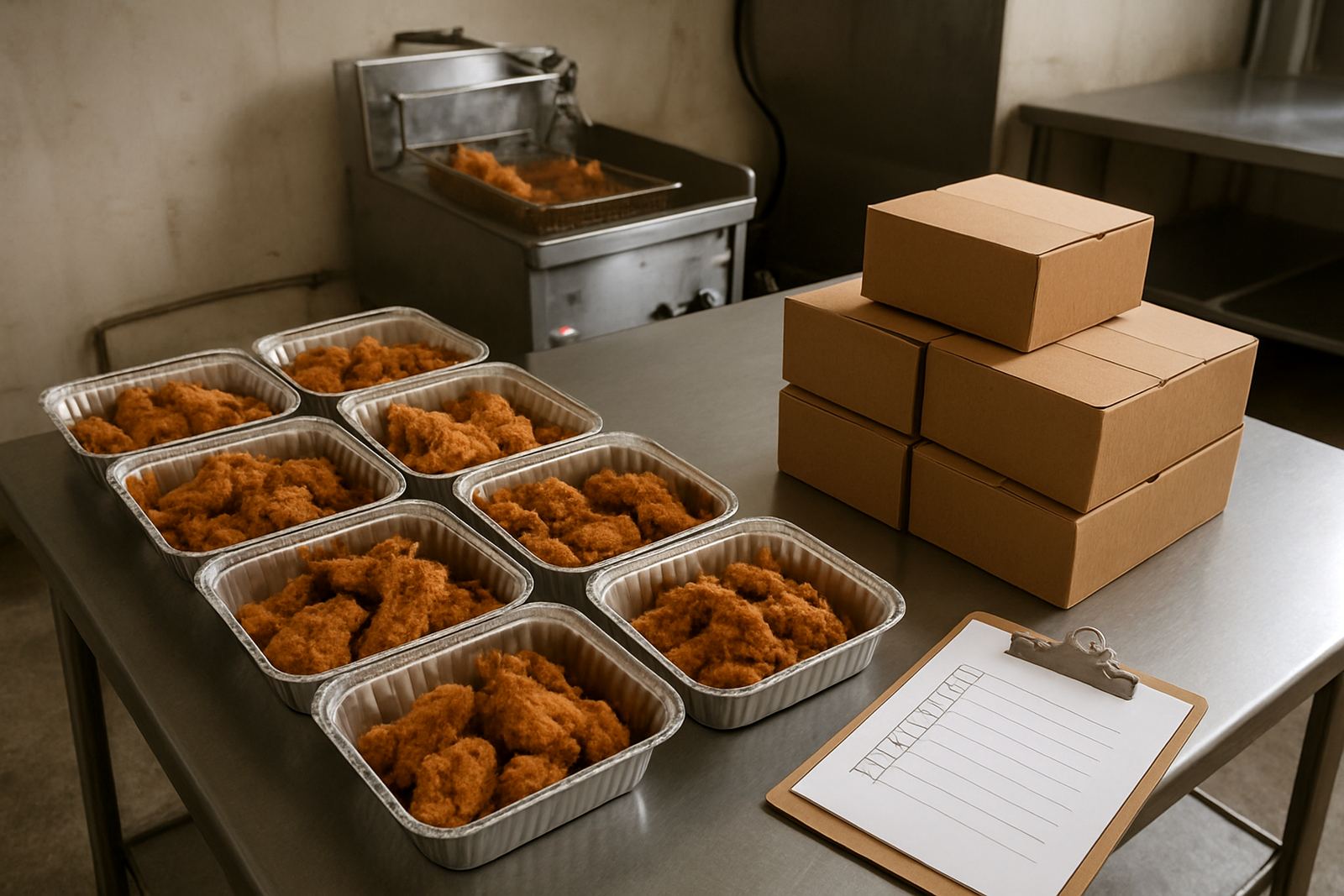
A proper line needs labels, a checklist and space for finished boxes. If the team packs in the wrong order, the line slows down and food quality drops. Keep the cold chain and hot holding separate, and make sure every packer can see the count on the order sheet. Simple discipline saves time and a lot of crossed wires.
- Set one station for portioning and one for sealing.
- Keep a count sheet at the end of the line for double checks.
- Store finished boxes on clean trays, not directly on counters.
Make the Box Easy to Carry and Easy to Open
Meal box packing is not only about what happens in the kitchen. It must also work for the person carrying it from a taxi rank, office foyer or church hall. Handles, secure lids and a flat base all help. Boxes that buckle in the hand are awkward and can spill sauce on clothing or paperwork. That is a small problem in the kitchen but a real headache at a site handover.
Opening matters too. A box that fights back at the table is frustrating, especially when the meal is for children or a large group. The lid should stay shut during delivery and open cleanly without crushing the food inside. This balance takes testing, and it is worth checking a few boxes before a big order goes out. The right box should feel practical, not fussy.
- Choose a lid that locks properly but opens without tearing.
- Check that the base stays firm when stacked.
- Test carry comfort with a full box before event day.
Plan for Heat, Humidity and South African Conditions
Johannesburg mornings can be cool, then the box sits in a warm room or delivery vehicle and picks up condensation. On the coast, humidity can soften paper packaging faster than expected. That is why good meal box packing has to account for local conditions, not just the menu. A box that looks fine on a prep table can fail after twenty minutes in a closed van or under a marquee at a community event.
For hot meals, ventilation is useful as long as it does not let the food dry out. For cold components, insulation matters more. The aim is to keep the inside of the box stable until handover. A little planning around travel time, weather and load-shedding schedules can make the difference between a neat meal and a soggy one. Small detail, big result.
- Use packaging that matches the weather and travel time.
- Keep hot meals hot and cold items cold until dispatch.
- Prepare an extra buffer for delays at security gates or traffic.
A Braamfontein Event Example That Shows the Difference
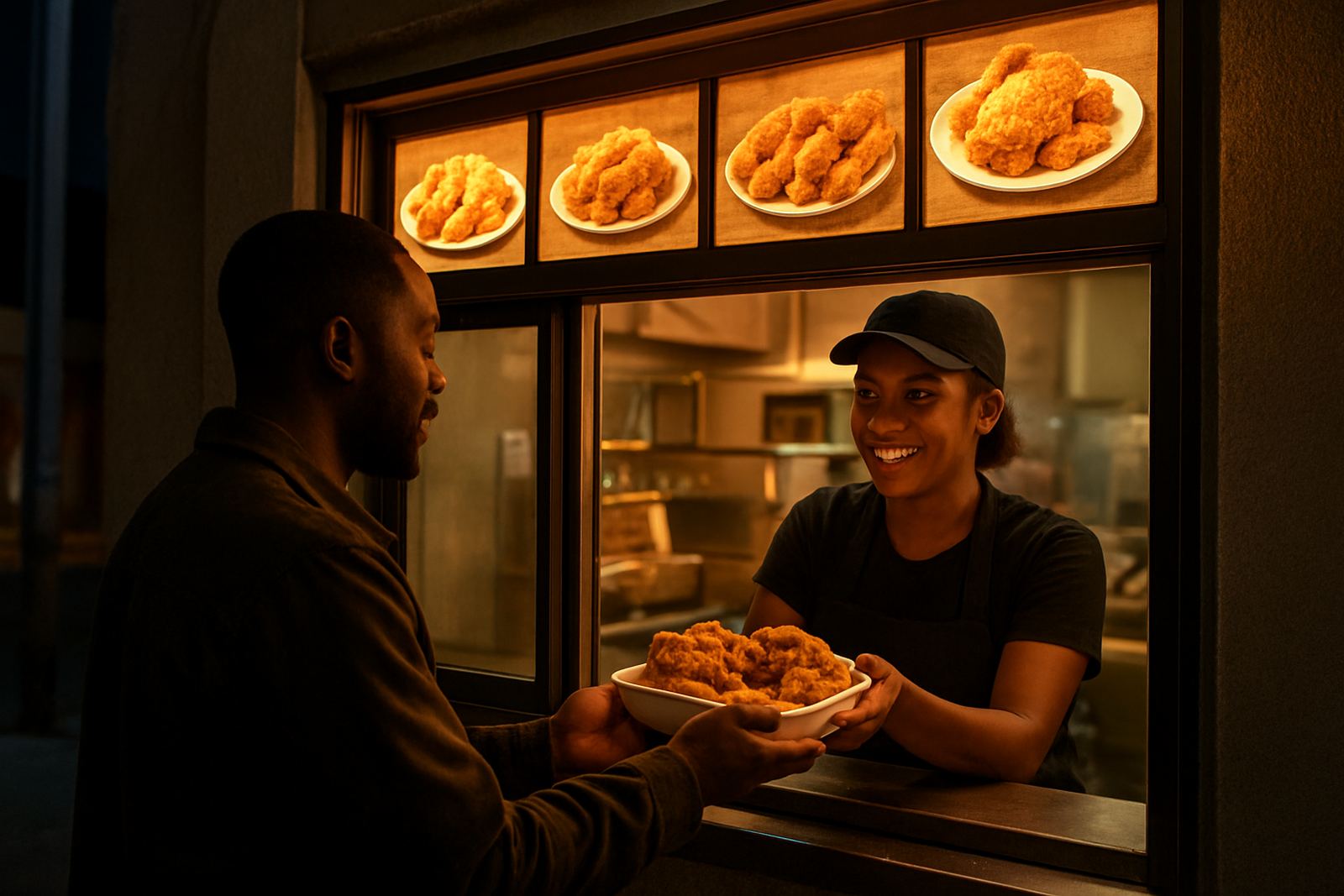
Picture a lunchtime order leaving Braamfontein for a student function in Newtown, with extra boxes going to a staff meeting in Randburg. If the meals are packed loosely, the wings shift, the chips steam and the labels get mixed up at handover. If they are packed properly, each box leaves in order, stays sealed and arrives ready to serve. That saves time for the organiser and keeps the line moving at reception.
For bigger jobs, the best practice is simple: pack by meal type, stack by route and label by count. A delivery team should know which boxes are for the front table, which are for the crew and which need to go first. When that system is followed, service feels calmer and the food reaches people the way it should. It is not fancy. It just works.
- Group boxes by destination before loading the vehicle.
- Label special meal requests clearly on top and sides.
- Do a final count before leaving the kitchen, not after.
Why Better Packing Improves Service as Much as Taste
Good meal box packing does more than protect food. It makes distribution cleaner, quicker and less stressful for everyone involved. Schools need speed, offices need order, churches need clear handover and event teams need a process that does not slow the room down. When packing is done well, the kitchen looks professional and the meal feels considered from the first lift of the lid.
That is why the packing stage should be treated as part of the meal, not an afterthought. A good recipe can still disappoint if the box is badly packed. With clear separation, firm sealing and a sensible handover plan, the food arrives ready to enjoy and the distribution team can keep moving without drama.