
The crunch starts before the pan heats up
Good fried chicken starts with dry surface moisture, steady seasoning and a coating that has time to settle. If chicken goes straight from the fridge into flour, the outside can sweat as soon as it meets heat, which makes the crust patchy and heavy. A short rest after seasoning helps the salt draw flavour into the meat while the surface firms up a little.
In a busy kitchen, that resting step is often the difference between good and average. For a family meal on a Friday night in Braamfontein, or a bulk order heading to Soweto, the prep has to be consistent. Pieces that are sized evenly will cook more evenly, and that matters because overcooked edges dry out while the centre finishes late.
- Pat chicken dry before seasoning.
- Let the coating sit briefly before frying.
- Keep pieces similar in size where possible.
Flour, spice and starch need the right balance
The coating is doing more than adding taste. It creates a dry outer layer that can turn crisp when it meets hot oil. Plain flour works, but many kitchens mix in starch to lighten the crust and reduce that thick, bread-like feel. The exact blend changes the finish, but the aim is always the same: a shell that bites back without soaking up too much oil.
Seasoning also matters more than many people think. If the flour is bland, the chicken can taste flat even when the crust looks golden. If the spice mix is too heavy, it can burn before the chicken is fully cooked. The best balance gives colour, flavour and a clean crunch, not a dark shell that flakes off in oily bits.
- Use a coating that is seasoned all the way through.
- Shake off excess flour so the crust is not too thick.
- Give the coated chicken a short rest before frying.
Oil temperature decides the final texture
Heat control is where many crispy batches are won or lost. If the oil is too cool, the chicken absorbs more fat and the coating goes soft. If it is too hot, the outside browns too fast while the middle stays underdone. A steady frying temperature gives the crust time to set, bubble and dry into a proper shell.
In practical terms, that means not crowding the fryer. When too many pieces go in at once, the oil temperature drops and the surface starts to stew instead of fry. That is especially important for event catering where dozens of portions may be moving at once. In Braamfontein, a lunch order for offices near the station will need a different flow from a church feeding in Pretoria Central, but the same rule still applies: keep the oil hot and the basket light.
- Fry in smaller batches.
- Allow oil to recover between loads.
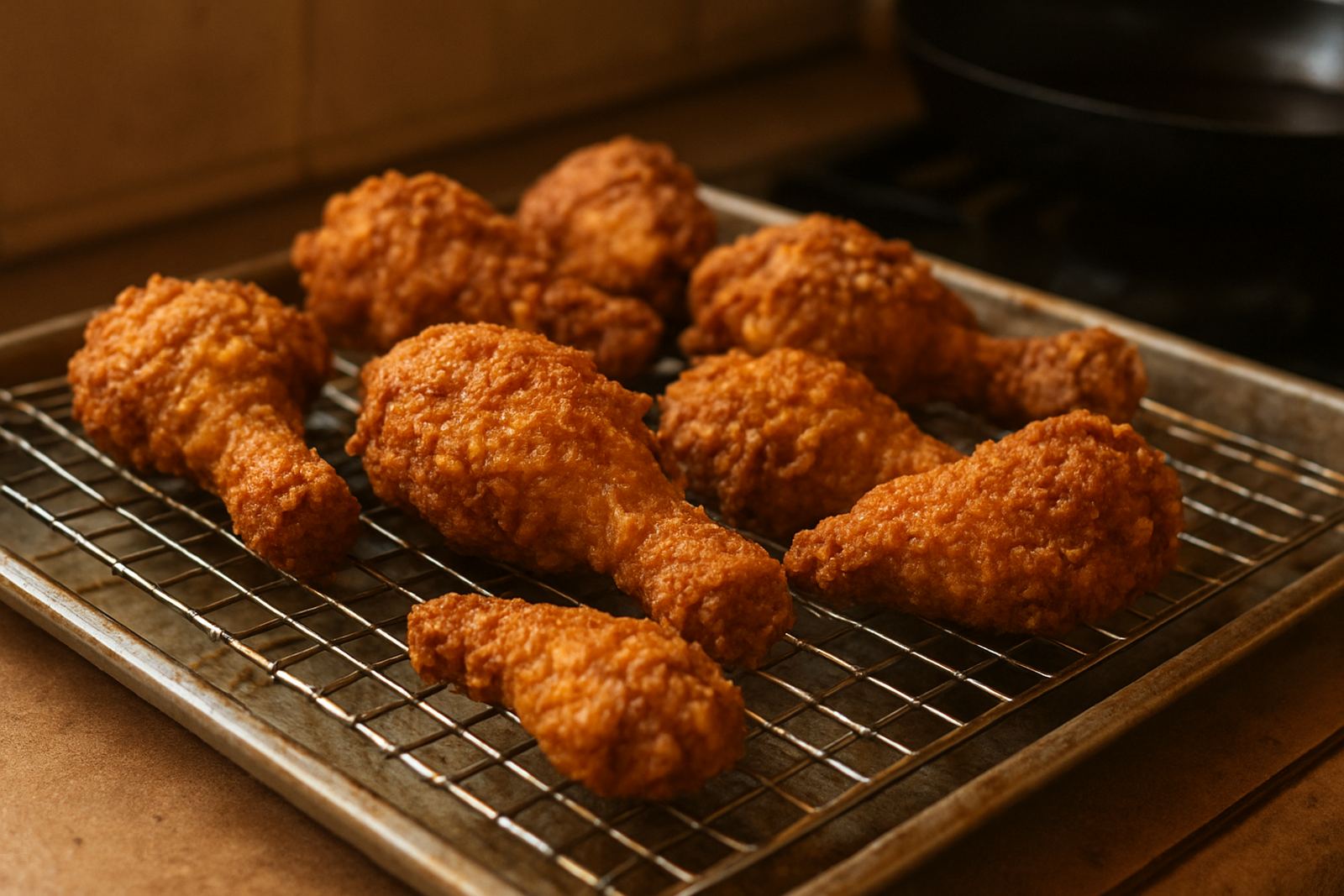
- Drain on a rack or perforated tray, not a closed container.
Holding chicken hot without trapping steam
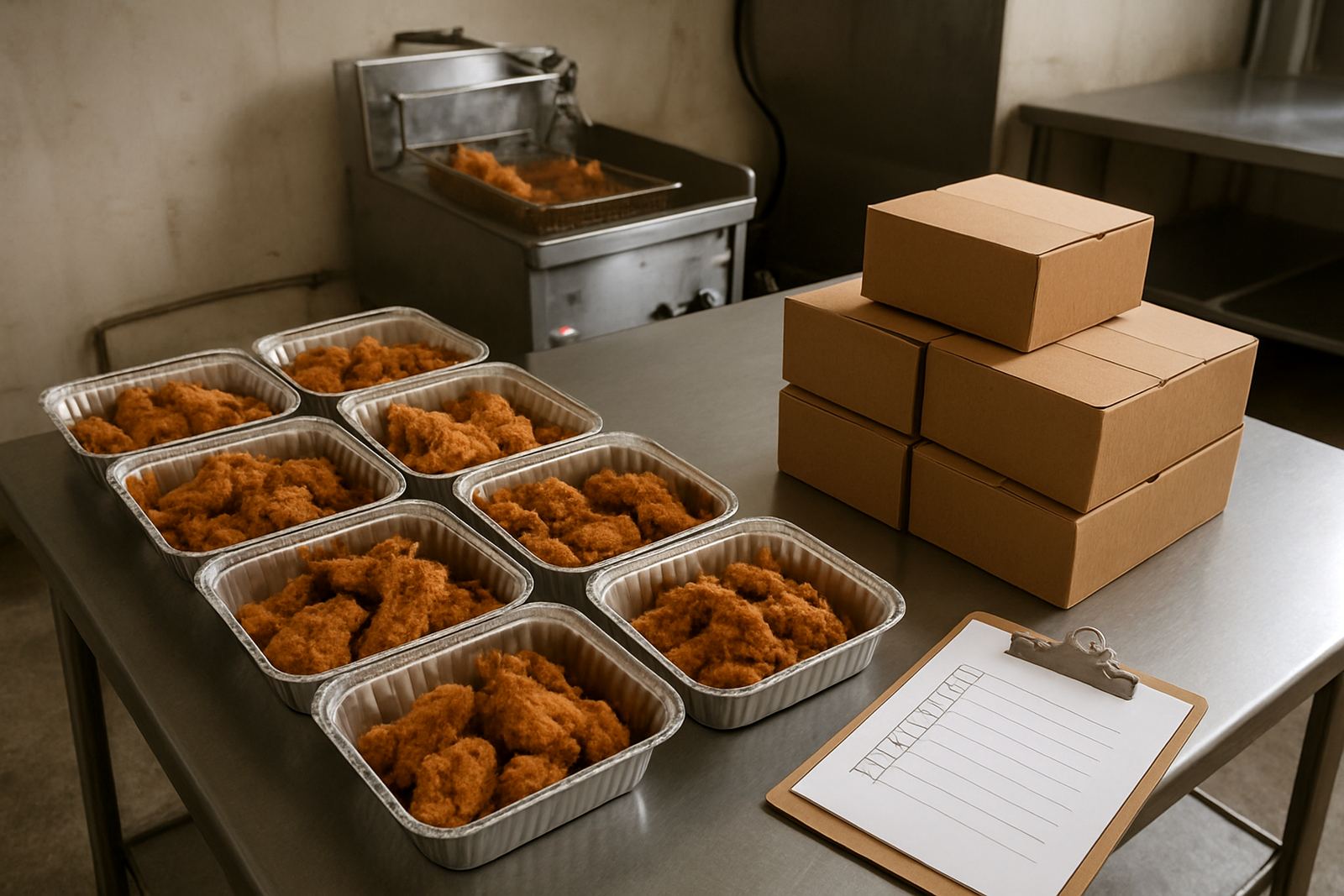
Once chicken leaves the fryer, the clock starts. The crust can lose its snap quickly if steam has nowhere to go. That is why holding trays, boxes and lids have to be chosen carefully. A sealed box keeps heat in, but it also traps moisture. A vented setup lets excess steam escape, which helps preserve the finish for longer.
This is one of the biggest practical lessons for takeaway and delivery. A meal for Midrand can travel well if it is packed with airflow in mind, but it can arrive limp if the hot chicken is stacked too tightly or sealed before the steam calms down. For crew meal drops and school catering, timing is just as important as cooking. Freshly fried chicken should be rested briefly, then packed in a way that avoids condensation.
- Do not stack hot chicken too tightly.
- Use packaging that allows some venting.
- Keep sauces separate until serving.
What helps on delivery days across Johannesburg
Delivery makes crispness harder, but not impossible. The aim is to shorten the time between fryer and plate, and to keep the chicken from sitting in its own steam. In a city run like Johannesburg, with traffic from Sandton to Newtown and school runs in Randburg, that planning matters. A batch that leaves the kitchen at the right temperature can still hold its texture if the journey is organised well.
There is also the issue of weather. On humid summer days, especially near the city centre after rain, moisture in the air can soften an uncovered crust faster. On colder days, the issue is less humidity and more condensation from enclosed packaging. Either way, the holding method should suit the order size. A family bulk order needs different handling from a small wings platter for a quick office lunch.
- Match the packing method to the travel time.
- Keep dips, gravy and sauces separate.
- Use insulated carriers without sealing in steam.
A Braamfontein example of crisp done right
Picture a Friday rush in Braamfontein. Students want wings, office staff want family boxes to share later and a nearby event team wants meal boxes ready for collection. The kitchen cannot rely on luck. It needs a clear routine: season early, coat evenly, fry in controlled batches, drain properly and pack with care. That is how a crunchy crust can survive the day without turning greasy.
The same approach works for church catering in Soweto, corporate lunches in Centurion and birthday packages in Pretoria Central. Crispy chicken is not about one trick. It is about respecting each stage so the final bite still has texture. When the method is consistent, people notice, because the first bite tells the whole story.
That is why the best fried chicken tastes just as good after a short wait as it does straight from the oil. The crunch should be something you hear, not something that disappears before the plate reaches the table.