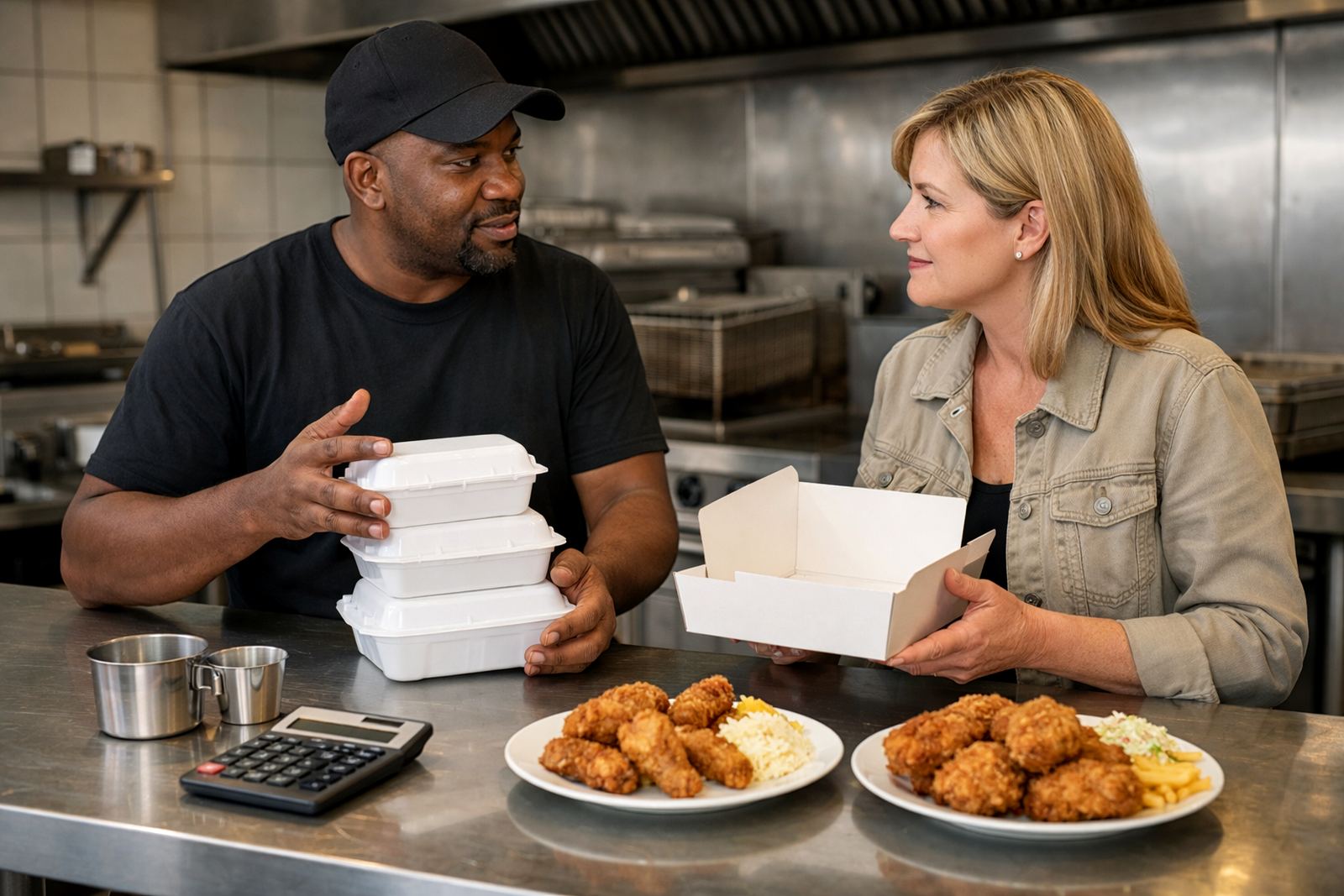


Start With the Headcount and the Appetite
The first step is simple: know how many people are eating and what kind of day they are having. A 12 person team with meetings across the morning will need different portions from a sales floor that can break for lunch all at once. In Braamfontein, where offices often run on tight schedules, we advise clients to confirm numbers early and add a small buffer for last-minute arrivals.
It also helps to think about who in the group wants full meals, who prefers lighter portions, and whether anyone needs milder options. That way the order does not become a guessing game when the food arrives. If you are feeding a mixed team, one box of wings and one family meal can go further than expected, especially when there are sides and a few extra sauces on hand.
- Count everyone who is likely to eat, not only the people in the room at 9am.
- Add a small extra amount for unexpected guests or late returns from site visits.
- Note any spicy, mild or sharing preferences before placing the order.
Choose the Right Mix for a Working Office
Office lunches work best when they are easy to serve and simple to eat. Fried chicken, wings, family meals and meal boxes are practical because they do not need fancy plating or long prep once they arrive. For teams in Johannesburg CBD or Midrand, this matters on busy days when breaks are short and people need to get back to work quickly.
A mixed order can suit different roles in the same office. Managers may want boxed meals for cleaner service, while a bigger team lunch may call for platter-style sharing. If the office is hosting clients, a neat set of meal boxes can look more organised than a loose spread on a small counter. It is worth choosing food that travels well and still tastes good after the drive from the branch or service area.
- Meal boxes suit individual portions and cleaner serving.
- Platter orders are useful for informal team breaks and shared tables.
- Family bulk orders work well when one team is feeding a larger group at once.
Timing Matters More Than People Think
Late lunch delivery can throw off a whole afternoon. If your office usually breaks at 12:30, the order should be placed early enough to allow for traffic, building access and delivery setup. In places like Sandton, Randburg and Centurion, road conditions and security checks can add a few extra minutes, so it is wise to plan for that instead of cutting it fine.
We often recommend setting a delivery window rather than an exact minute if the team can allow it. That gives the kitchen and delivery team room to handle traffic, load-shedding shifts and gate procedures without rushing. It also means the food is less likely to arrive while staff are still in meetings or off-site.
When office lunches are for a scheduled meeting, it helps to confirm the serving time the day before. A quick check on access instructions, parking and the best point of entry can save time on the day and avoid delays at the front gate. A little planning goes a long way, even if the lunch is simple.
Plan for Service, Not Just Food
Good office catering is not only about what is on the tray. It is also about how quickly the meal can be served, who will unpack it and whether there is space to set it out. For offices in older buildings around Newtown or Braamfontein, lift access and small break rooms can affect how the order should be arranged. If the team is using a shared kitchen area, neat packing makes the lunch easier to hand out.
It helps to assign one person to receive the order and one person to confirm the count before the meal is opened. That avoids confusion when everyone arrives at once and wants their box. A clear plan for serving can be the difference between a smooth lunch and a crowded counter.
- Choose a delivery point that is easy for the team to access.
- Make sure someone is available to receive the order and check quantities.
- Keep serving space clear before the food arrives.
Use Budget and Quantity Together
Most office orders work better when budget and quantity are discussed together. The cheapest option is not always the best value if the group is large and hungry, while a bigger spread can make sense when lunch is serving as both a meal and a team break. That is especially true for company anniversaries, training days and client visits where the food needs to do more than simply fill stomachs.
It is worth deciding early whether the office wants one shared order, several smaller boxes, or a bulk meal delivery. Once that is clear, the kitchen can help shape the order around the number of people and the expected serving style. In practical terms, a well planned order usually reduces waste and keeps everyone fed without overspending.
- Set the budget per person before picking the menu mix.
- Decide whether the lunch is for a meeting, a working day or a special office event.
- Choose quantities that match the actual break time and the number of eaters.
A Johannesburg Example That Saves Time
Picture a consulting office in Braamfontein with 18 staff, two visitors and a 1pm strategy meeting. The team needs food that can arrive on time, be handed out quickly and still taste good after a few minutes on the side counter. In that situation, a mixed order of meal boxes and wings platters works better than trying to build a complicated buffet.
The office manager confirms headcount in the morning, notes that three staff prefer milder options, and arranges a delivery point near the reception area. The order arrives before the meeting starts, the serving space is already clear, and the team eats without losing the rhythm of the day. That kind of planning is small but it matters, especially when the office has back to back tasks and the afternoon is already full.
For teams in Soweto, Pretoria Central, Midrand and the surrounding service areas, the same rule applies. Know who is eating, choose food that travels well and give the supplier enough time to organise delivery and setup. When those basics are covered, office lunch becomes easy to manage rather than another item on an already full list.