Why the fryer sets the pace of the kitchen
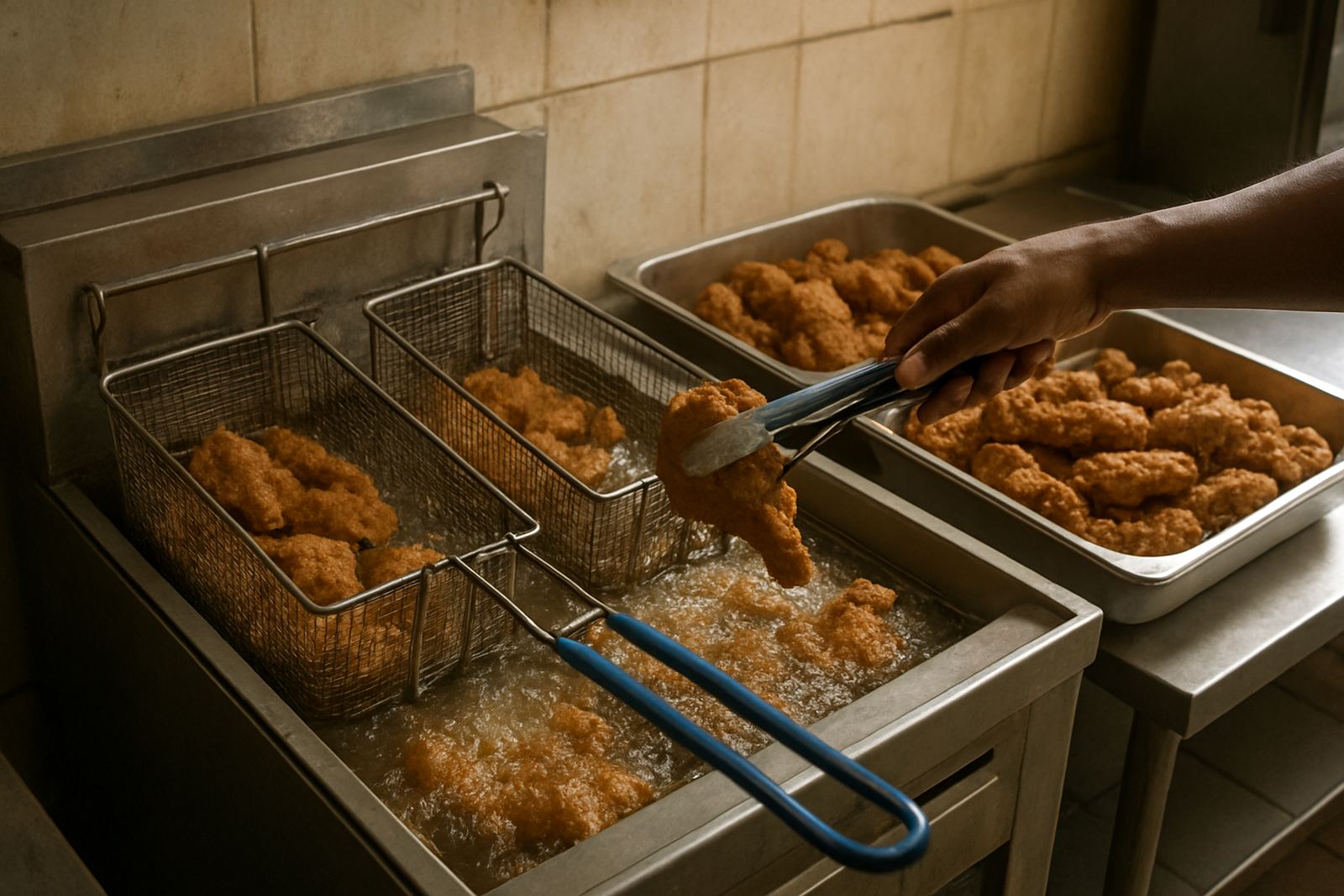
In a chicken kitchen, the fryer does more than cook. It sets the pace for the whole pass, from the first wings dropped into oil to the last family meal packed for collection. If the oil is too cool, the coating drinks in fat and the crust goes soft. If it is too hot, the outside darkens before the inside is properly cooked. The best service comes from a steady middle ground, with the team watching every batch and adjusting quickly when orders pile up.
That is where planning matters. A fryer station cannot be treated as a place where someone just stands and waits for the next basket. It needs stock pulled in the right order, portions prepped properly and call-outs from the front counter that match what the kitchen can actually push. In Braamfontein, where lunch traffic can move fast and student orders come in waves, a fryer crew has to read the room before the rush starts.
The small checks that keep every batch consistent
Consistency is built on small checks done again and again. The best fryer teams do not rely on guesswork. They check oil quality, basket load sizes, cook times and resting time before packing. Even the way pieces are arranged in the basket can affect the finish. Too crowded and the coating sticks together. Too little product and the batch cooks unevenly.
- Keep basket loads matched to the size of the chicken pieces.
- Shake off excess coating before frying to avoid clumps and burnt bits.
- Drain properly on racks, not flat trays that trap steam.
- Replace oil at the right time, before flavour turns heavy or dark.
- Salt and season immediately after frying while the surface is still hot.
These checks sound simple, but they are what separate a rushed meal from one that arrives crisp and well handled. Naledi Molefe and the team know that when the line is busy, the basics become even more important, not less.
What timing means when orders stack up
Timing is the hardest part of fryer work because it affects every part of the customer experience. A school catering run has different pressure from a late afternoon wings platter, and a crew meal drop has its own delivery window. If the kitchen cooks too early, chicken sits and loses its bite. If it cooks too late, customers wait and the order line starts to back up. The right approach is to cook in short, well managed waves that match real demand.
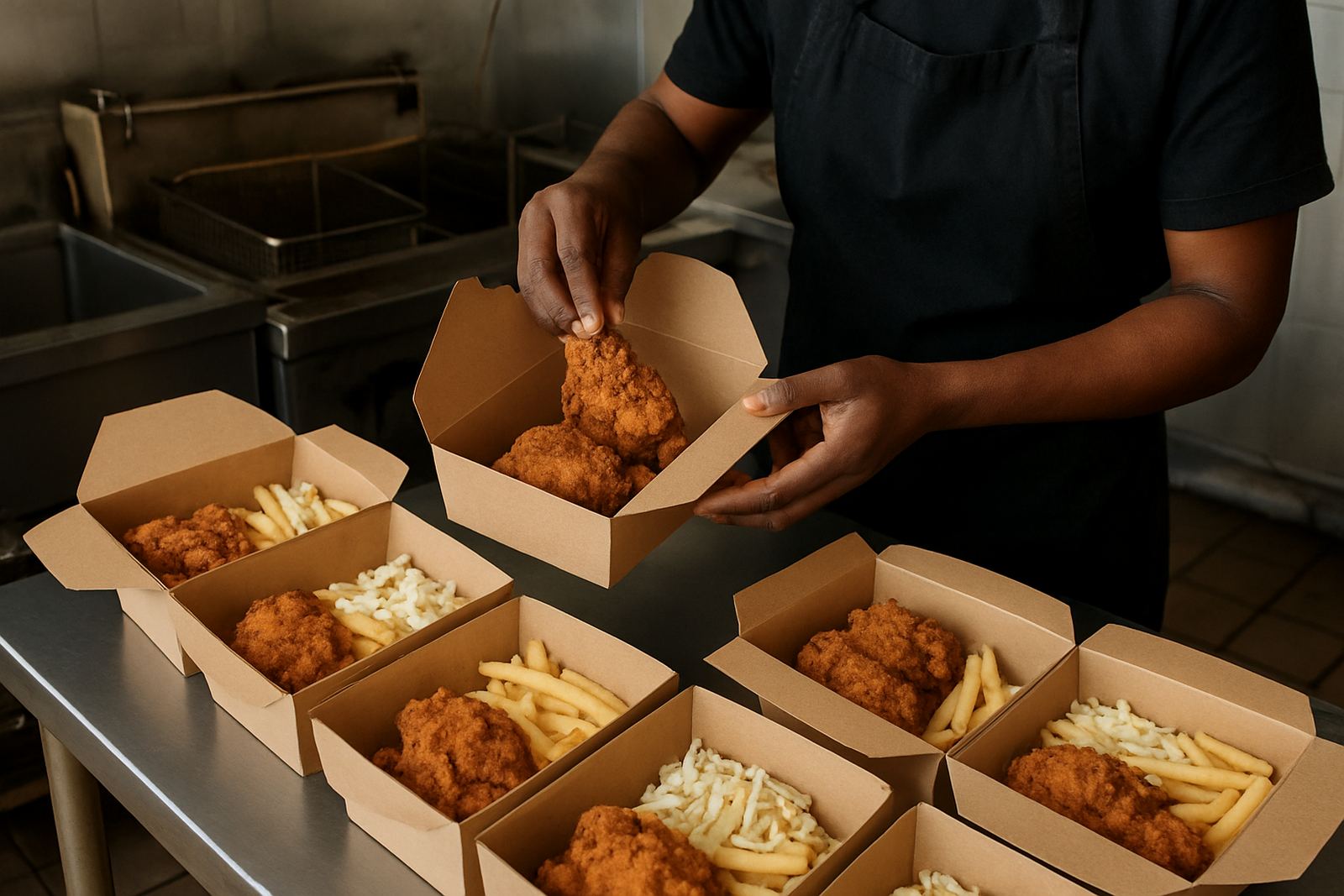
That is why a fryer station needs clear communication with the packing table, the front counter and the delivery handover point. In a place like Johannesburg, where traffic can turn a 10 minute trip into 25 minutes, the kitchen has to think past the fryer itself. The food must be packed so it stays ventilated, not sealed into sogginess, and boxed in a way that keeps wings separate from meal sides when needed.
Practical timing habits help a lot:
- Start frying the longest items first, then move to faster cooking wings and smaller pieces.
- Stagger batches so the pass is never flooded with too much at once.
- Use a separate holding area for short rests before packing.
- Match batch size to the day, whether it is a quiet Tuesday or a crowded payday Friday.
Quality control is not a once-a-day job
Quality control has to happen all day, not only at opening. Oil changes with use, and food quality changes with heat, humidity and volume. On a damp Johannesburg summer day, coatings can pick up moisture faster than expected. In colder weather, food can lose heat quickly on the way to a car park or office block. A busy fryer team watches these shifts and responds with small adjustments.
At Kung Fu Chicken, that means looking at colour, crunch and internal doneness every shift, not just assuming the machine or method will carry the day. Thabo Mokoena’s view is practical: if the product is not right, nothing else matters. That applies to a family bulk order for Braamfontein, a corporate lunch in Sandton or a community feeding run in Soweto. The standard has to hold across all of it.
Good control also means knowing when to pause. If the oil starts breaking down or a batch is not meeting the usual finish, the right move is to stop, correct and continue. Saving a minute is never worth losing a whole tray of chicken.
How events, bulk orders and delivery change the fryer plan
Events put a different kind of pressure on the fryer. A birthday package, church catering or a corporate lunch does not behave like walk-in trade. The order may be larger, the timing tighter and the delivery point less predictable. Kagiso Ncube has to map those details early so the fryer is not caught off guard by a sudden 80 portion load with nowhere to stage it.
The right method is to build the frying plan backwards from the handover time. First comes the delivery window. Then the packing time. Then the cooking sequence. Once that is clear, the fryer can work in order and the rest of the team can support it without confusion. For larger drops, the kitchen may split batches between wings, family meals and meal boxes so that every item lands in the right condition.
- Confirm portion counts before the first batch starts.
- Allow enough time for packing, sealing and labelling.
- Keep sauces, sides and chicken separate until the final handover.
- Plan for traffic delays on routes across Pretoria, Midrand and Randburg.
That sort of planning saves more than time. It protects the quality of the food and keeps the customer experience steady from the first call to the last delivery box.
A local example from the Braamfontein rush
Picture a weekday lunch in Braamfontein. Office staff want quick takeaway, students are looking for a filling meal on a budget, and a nearby business has ordered crew meal drops for the afternoon shift. The fryer team cannot treat all three orders the same. Some need speed, some need careful packing and some need a full hot hold plan before dispatch. If the station is organised, each order can move through without stepping on the next one.
That is where a strong operations team matters. Lerato Dlamini keeps the service side aligned, Sibusiso Khumalo keeps the food standard steady and Mpho Sekhoto tracks customer needs when a change comes in at the last minute. The fryer works best when the whole branch works as one unit. The customer might only see the final box, but behind it there is a chain of decisions that started long before the oil heated up.
A busy fryer is not about speed alone. It is about making speed dependable, so the last order of the lunch rush looks as good as the first.