
A Community Day With Peak Traffic By The Hour
The client was a community event team in Pretoria West running a full day fun event with music, games, stalls and a steady flow of families from late morning into the afternoon. The main concern was not just feeding people, but feeding them when they were actually ready to eat. Attendance came in peaks, especially after performances and during prize giving, so we built the service around those rush periods rather than pushing all the food out at once.
The brief was simple on paper: keep the chicken hot, the service fast and the portions consistent across each wave. Because the site had limited holding space and a busy shared parking area, we also had to work with tight vehicle access and a set-up that would not get in the way of the programme. Load-shedding was part of the planning too, so we kept the food plan practical and low risk.
- Area: Pretoria West
- Event type: community fun day
- Service style: staggered catering waves
- Main items: fried chicken, wings and family meal boxes
- Guest profile: families, children, volunteers and stall teams
The Brief, Timing And Site Constraints
We worked from a four week lead time, which gave us enough space to confirm numbers, map the timing blocks and agree on how the meals would be handed over. The fun day ran across most of the day, so one of the key decisions was to split the catering into three waves instead of one big drop. That meant the first meals could go out before the main crowd built up, with the middle and final waves timed to suit the event programme.
The site had a few practical limitations. The serving area was open and exposed, so wind protection was needed for packaging and hot trays. The venue also had limited prep space, which meant we had to arrive with food ready for controlled finishing rather than relying on a large on-site kitchen. We kept the pack-out compact and used stackable meal boxes to save space. It was warm weather in Pretoria, so cold drinks and neat queue flow mattered as much as the menu itself.
- Timeline: 4 weeks from first briefing to event day
- Service windows: 3 staggered waves across the programme
- Access: limited loading space and shared pedestrian movement
- Weather plan: covered holding, shade where possible and quick handover
What We Supplied On The Day
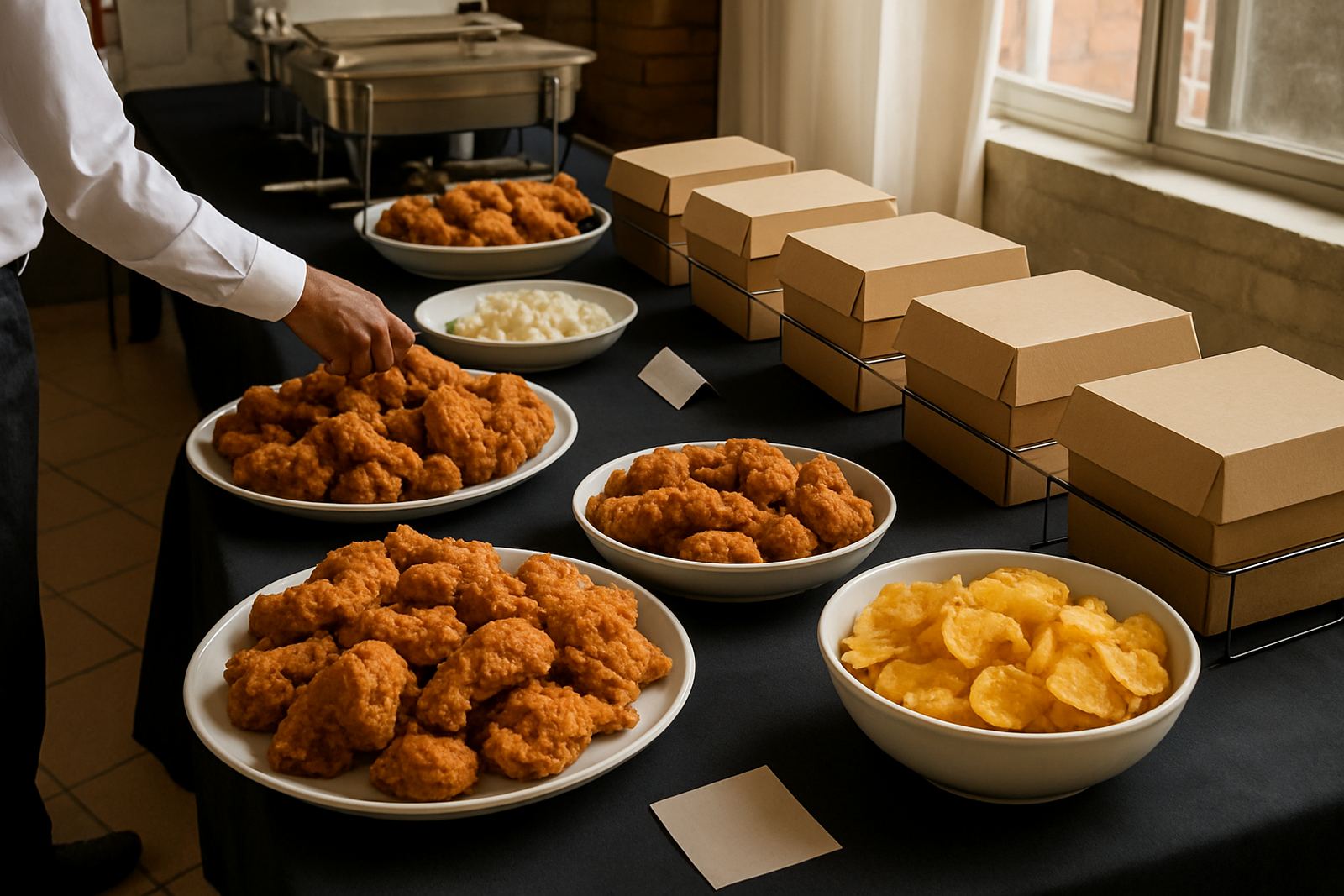
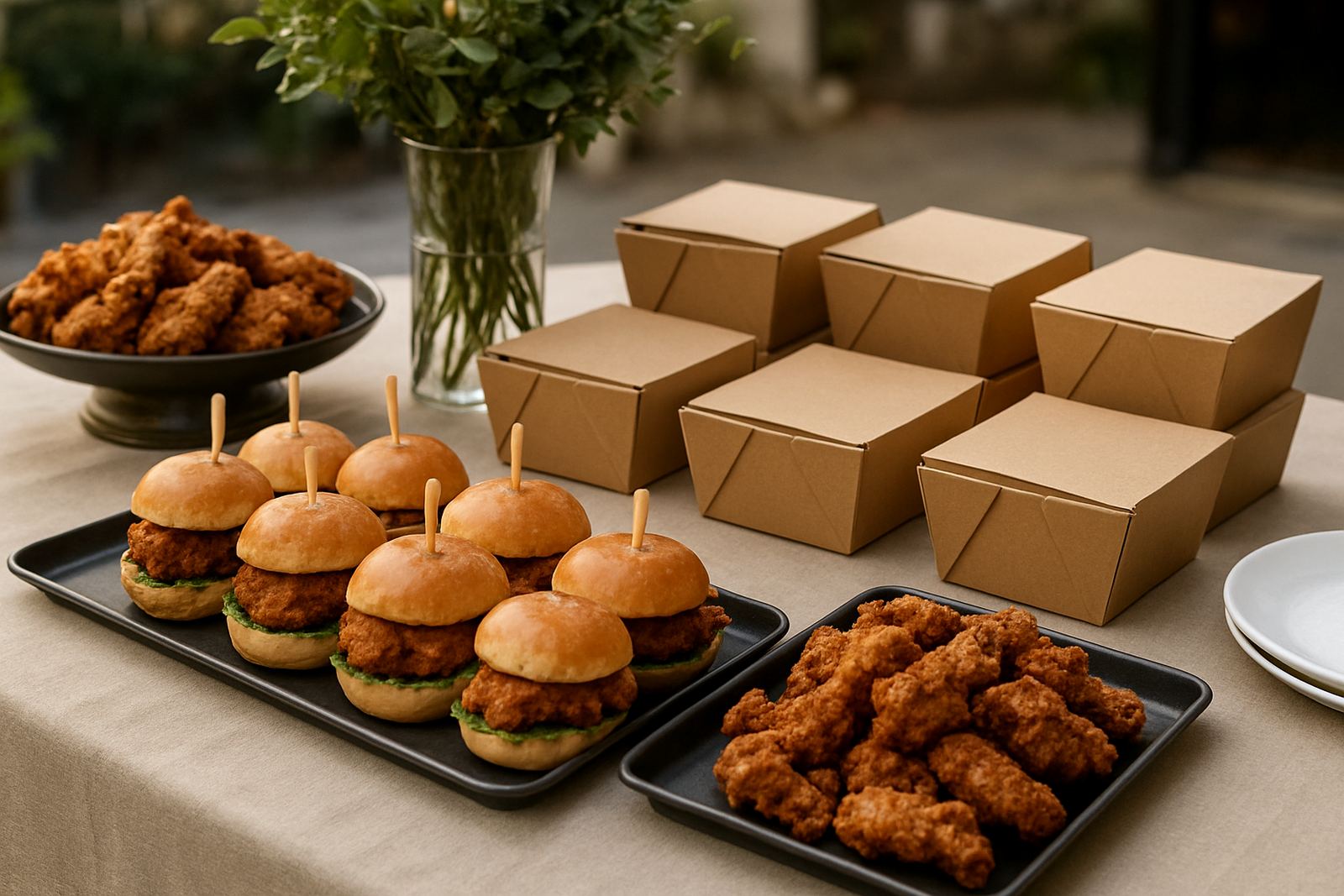
The menu focused on familiar crowd-pleasers that could move quickly and stay satisfying in a box. We supplied crispy fried chicken pieces, spicy wings, family bulk meals and event meal boxes sized for adults and children. Portions were planned to suit mixed appetite levels, with enough variety to keep the food line moving without making choices complicated. The aim was practical, filling food that held its flavour after packing and transport.
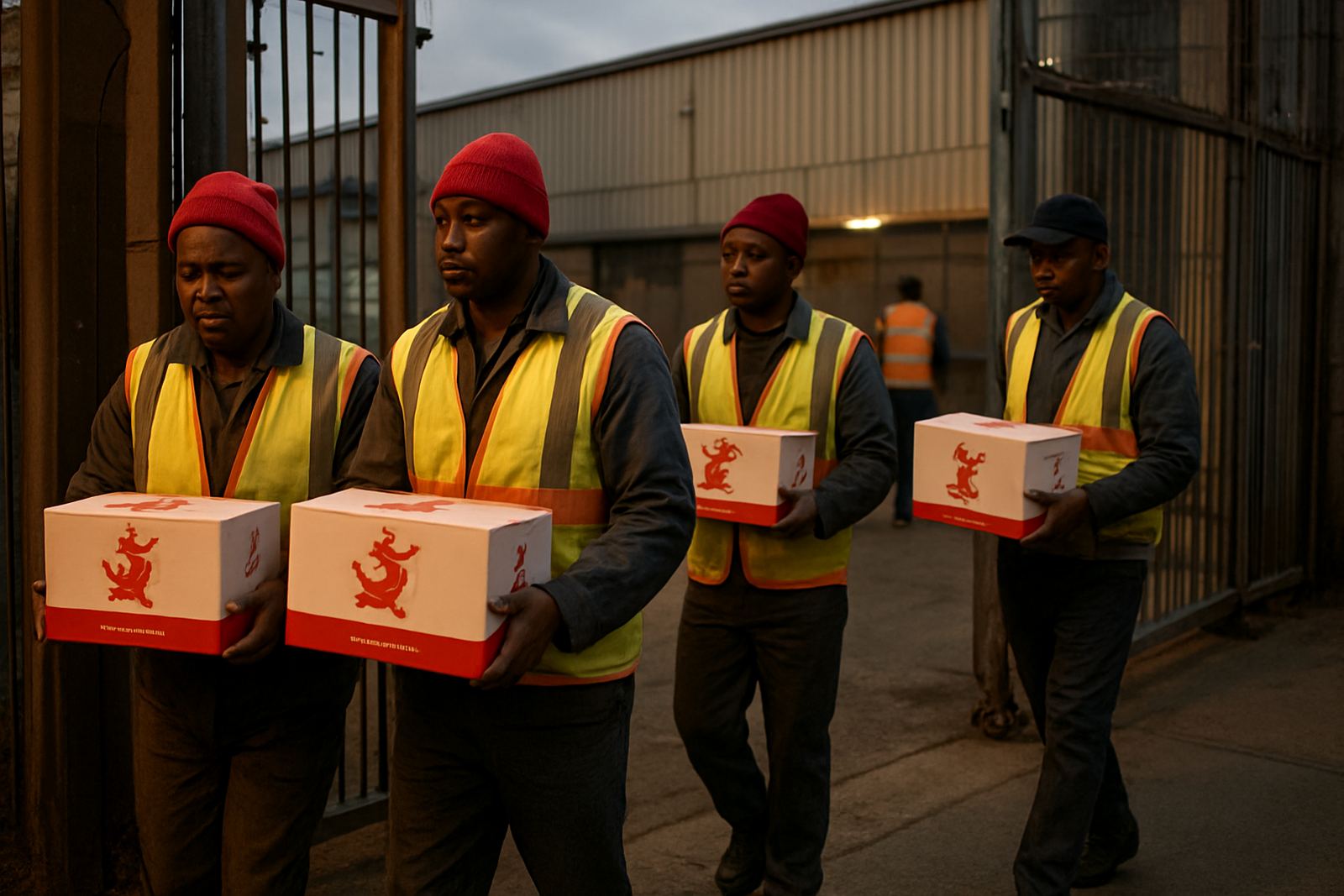
Our team handled prep, packing, transport, hot holding and distribution. We also assisted with setup of the serving point, including labelled meal stacks and a clean handover area for the volunteers helping on site. The chicken was packed to preserve crunch as much as possible, and the wings were grouped in a way that made counting and issuing easy. We used a simple production rhythm that reduced waste and kept each wave fresh.
- Hot holding for fried chicken and wings
- Pre-packed family meal boxes for fast issue
- Separate meal counts for adults and children
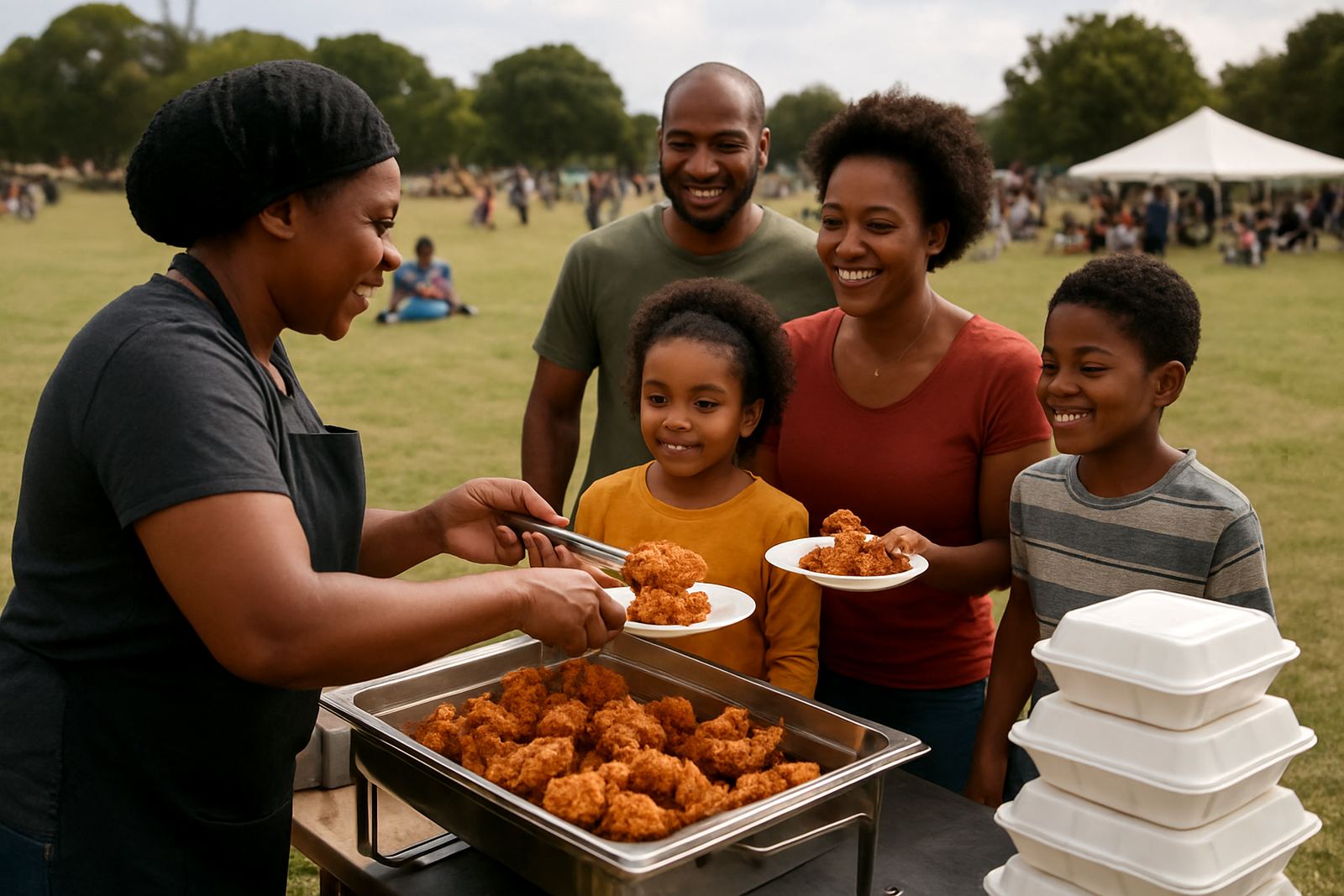
- On-site serving support for queue flow
How The Staggered Waves Worked
The success of the project came down to timing. We did not send everything at once. Instead, the first wave covered early arrivals and the event crew, the second wave was set for the main lunch peak and the third wave was kept ready for the later crowd and stall teams. That approach cut waiting time and helped avoid the usual rush that can build up at community events when everyone queues at the same point.
We kept close communication with the organisers throughout the day so we could adjust the release timing by a few minutes where needed. If a performance ran long or a crowd gathered at another part of the site, we shifted accordingly. It was a simple plan but it worked because it matched the reality of the event, not just the schedule on paper. By the final wave, the system was settled and the handover moved smoothly. There were a few rushed moments, but nothing that slowed the day down much.
- Wave 1: early crew and first arrivals
- Wave 2: main lunch crowd after programme peak
- Wave 3: later guests, volunteers and stall teams
- Adjustment allowed for programme changes on the ground
The Result For The Organisers And Guests
The organisers got a catering system that matched the event pace and kept guests fed without bottlenecks. Because the meals were released in waves, the serving point stayed manageable and the food remained hot rather than sitting out too long. Guests had a clear experience from queue to plate, and the organisers did not have to deal with a single heavy rush that would have put pressure on the whole site.
From our side, the biggest win was consistency. Portions stayed even, service stayed orderly and the team on site could focus on the event instead of chasing food delays. The organisers said the staggered approach made a visible difference to crowd movement, especially during the middle of the day when attendance was at its highest. For a Pretoria West community fun day with mixed age groups and shifting attendance, that kind of control matters.
- Queues stayed shorter during peak periods
- Meals were handed out while still hot
- Less waste from overproduction
- Better flow for families and volunteers
What We Would Do Again
If we were asked to do the same kind of event again, we would keep the wave structure and build in the same clear count system from the start. For outdoor fun days in Pretoria, a staggered plan is often the best fit because the crowd does not arrive in one neat block. We would also keep the packaging simple and strong, with enough room for easy carrying and a lid that holds up in the heat.
We would probably add an even more visible collection point for the later waves, since that helps when the event site is busy and people are moving between activities. The main lesson was that good event catering is not only about cooking well, it is about timing, transport and calm handling on the ground. That approach suits schools, churches, community days and corporate events where numbers can change during the day.
For Pretoria West, the format worked because it respected the event programme and gave the organisers one less thing to worry about.
Key facts
| Project | Pretoria West Fun Day |
|---|---|
| Location | Pretoria West, Pretoria |
| Timeline | 4 weeks |
| Service format | 3 staggered catering waves |
| Menu | Fried chicken, spicy wings, family meals and event boxes |
| Outcome | Shorter queues and steady hot service through peak attendance |