What the Midrand event needed
The client was a private events organiser working on a sports screening in Midrand, with guests arriving in waves before kick-off and staying well past half-time. The ask was for food that could be served fast, hold well under pressure and still taste good when the room was loud, busy and constantly moving.
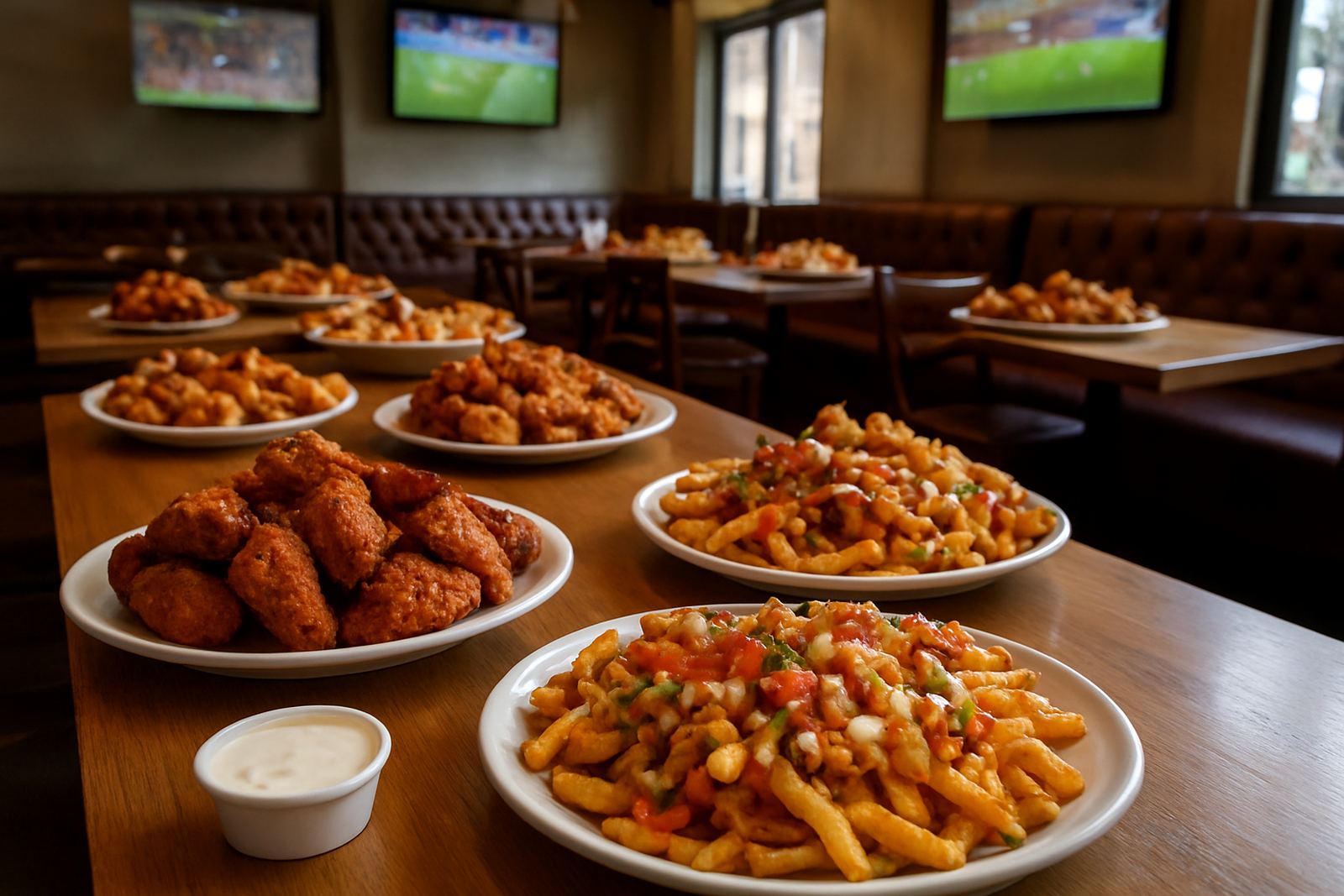
Because the screening was for a mixed crowd of families, friends and corporate guests, the menu had to suit different appetites without slowing service. We planned for a strong mix of wings platters, loaded chips and family-style top-up trays, with enough flexibility to handle last-minute headcount shifts and extra snack orders.
- Location: Midrand, Gauteng
- Event type: Sports screening
- Service style: Fast-counter service with replenishment
- Food focus: Wings platters, loaded chips, shared portions
Brief, constraints and service pressure
The main brief was speed without losing quality. The organiser needed food that could move quickly across the serving point, with no long waits between orders and no confusion around portion sizes. We also had to factor in venue access, parking flow and the usual match-day rush when guests try to eat during short breaks only.
Midrand events often run into practical issues like limited prep space, shared loading areas and tight timing around deliveries. We kept the setup compact and organised so service could stay smooth even when the room filled up all at once. The venue had indoor seating, so we also planned for steady topping-up rather than one big drop at the start that would cool down too fast.
- Constraint: limited prep space near the screening area
- Constraint: food needed to stay hot between bursts of demand
- Constraint: guest numbers could change close to match time
- Constraint: service had to work cleanly in a shared venue
Menu plan for fast crowd feeding
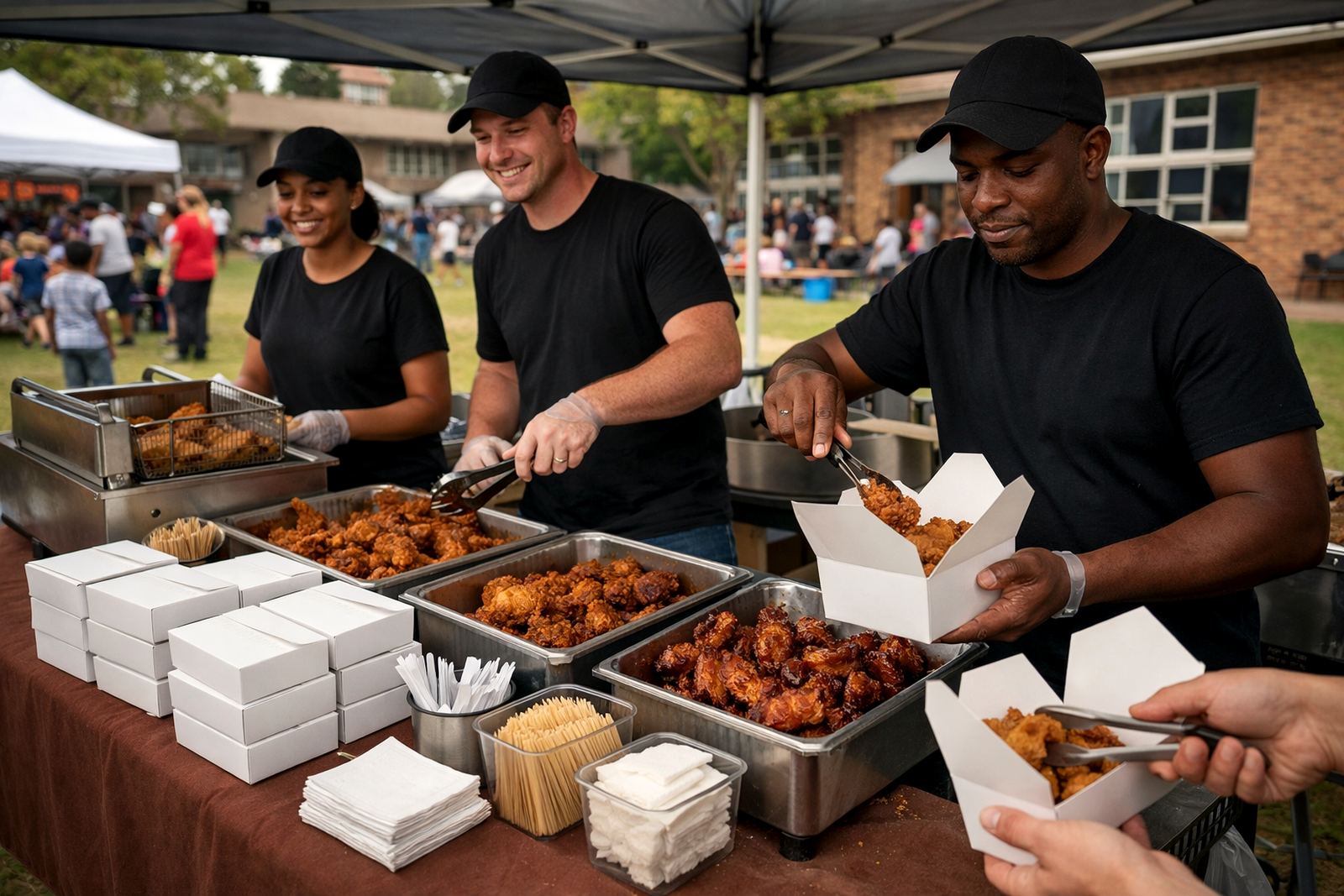
We built the menu around items that travel well and stay popular across different age groups. Wings platters carried the main load, with a balance of mild and spicy options so guests could choose their level of heat. Loaded chips gave the crowd a filling side that was easy to portion, easy to eat standing up, and strong value for a screening crowd.
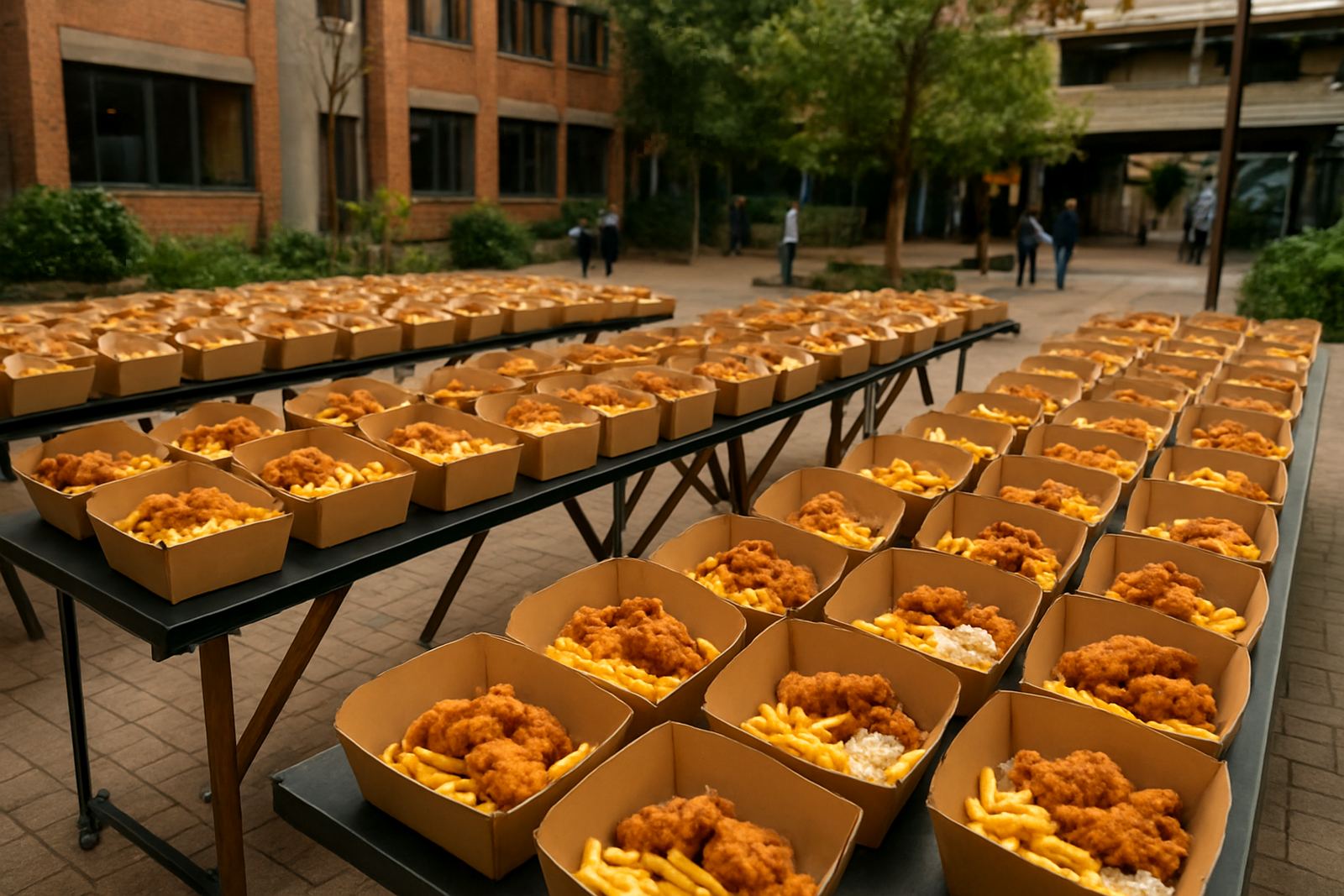
To keep things practical, we used packaging that could be opened quickly and handled without mess. Portions were set for sharing, with topping trays ready to be swapped in as soon as the first wave started emptying out. That meant guests were not standing around waiting for the next batch and the event team could keep the flow moving.
- Wings platters for shared tables and larger groups
- Loaded chips for quick, filling service
- Top-up trays prepared for half-time and late arrivals
- Portioning set for easy sharing and repeat orders
Kitchen prep and delivery timing
The work ran over one week from confirmation to event day. During the first two days we locked in the headcount range, delivery window and serving sequence. By midweek, the kitchen plan was set, ingredients were portioned and the team knew exactly when each tray needed to leave the prep line.
On event day, the delivery window was timed to arrive before peak guest intake, giving the venue enough breathing room to arrange the food station and clear any last-minute movement around the screening area. We kept the handover simple, with trays labelled and grouped by service order so the team could start serving immediately. There was a small delay on access at the loading point, but it was sorted quickly and did not affect the first round.
- Timeline: 1 week from confirmation to delivery
- Prep method: staged cooking and timed holding
- Delivery approach: grouped handover for fast setup
- Service rhythm: initial drop plus planned top-ups
How the service held up during the screening
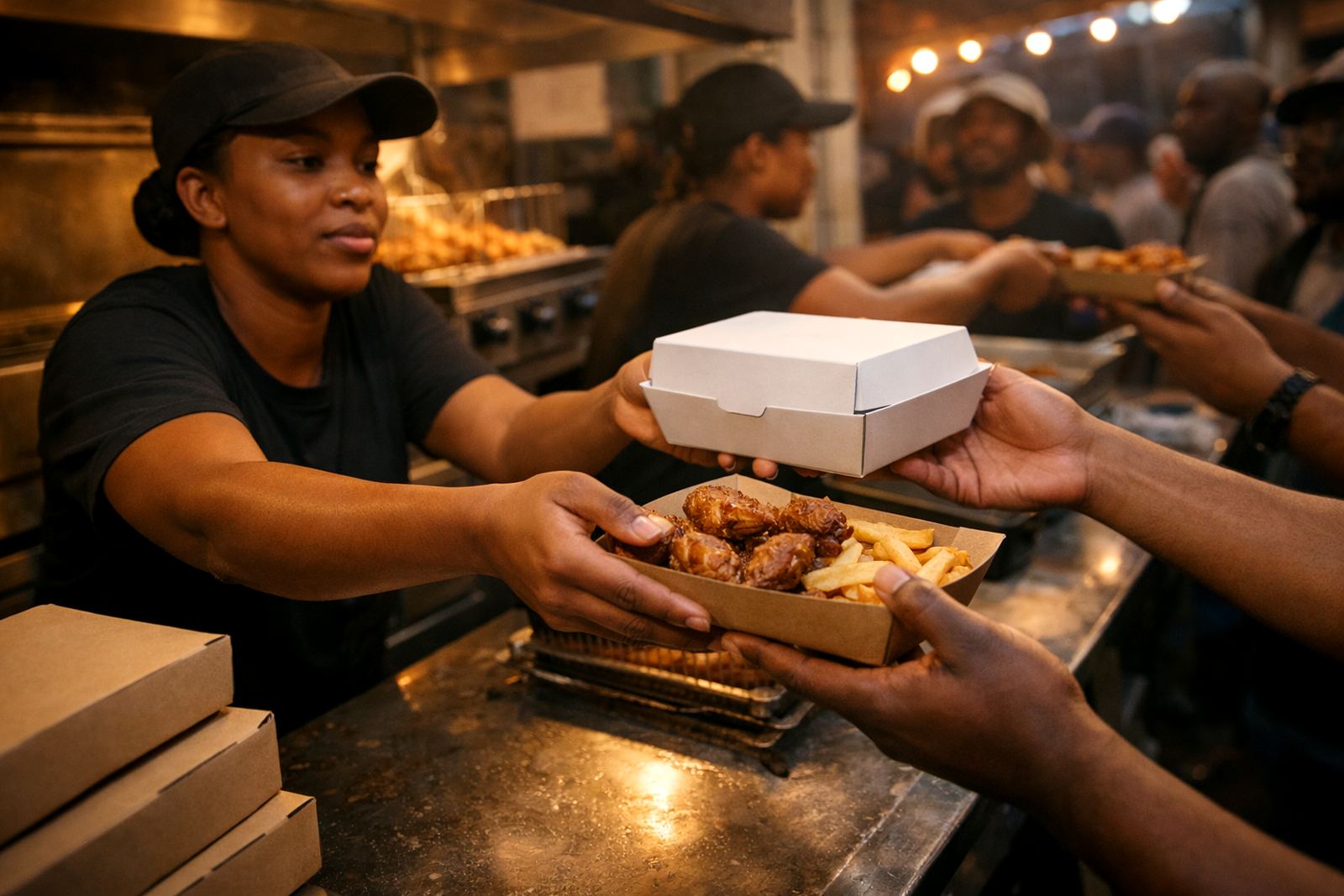
The strongest part of the job was the pace. Guests were fed without crowding the serving point, and the top-up service kept the platters looking full through the busiest parts of the game. Because the food was portioned for sharing, people could get back to their seats quickly and the organisers did not have to stop the screening for a long reset.
The loaded chips were especially useful because they worked as both a side and a main snack. Wings moved steadily all night, with the spicier trays going first and the milder options keeping family groups covered. The organisers reported fewer complaints about waiting, which is often the make-or-break issue at a live screening. It was a busy room but the food side stayed under control.
- Queues stayed short during peak breaks
- Food stayed hot through staged top-ups
- Shared portions worked well for groups and tables
- The serving point needed very little rework once live
Results and what we would repeat
The event did what it needed to do: guests were served quickly, the food matched the pace of the screening, and the organiser had a clean catering setup that did not create extra stress. The client came back asking for a similar format for future viewing events, which tells you the service rhythm was right for the crowd.
If we were doing it again, we would keep the same menu structure but push even harder on staggered replenishment, especially if the crowd is expected to spike at half-time or after a big score. We would also recommend a slightly wider serving gap for any venue with limited access, just to make loading and handover even smoother. For Midrand sports screening jobs, that balance of speed, heat and portion control works well.
- Best result: fast service with no food bottleneck
- Best-fit menu: wings platters and loaded chips
- Repeatable approach: staged delivery, planned top-ups
- Future tweak: wider handover window for busy venues